
Rosely Review

Reviewed by AI Surf Dude

A distinctive companion-and-creator network that combines fictional character chat with an AI-influencer feed, publishing and community discovery.
Verdict: Rosely is a genuinely distinctive mix: companion chat, fictional-influencer creation and a social publishing feed in one network. Public pages show posts, likes, comments and character profiles before you sign up, so the community surface is part of the pitch rather than something hidden behind a login. It is companion-as-creator-network, which nothing else on this board quite replicates.
Core browsing and basic interaction are described as free, with a substantial legal centre nearby, and the social layer is the whole personality of the product. That is also its natural limit: advanced image and video tools may need credits or subscriptions whose current costs want signed-in confirmation, and there was no complete public price table in the open FAQ. The community focus makes it less suited to anyone who only wants a private one-to-one companion.
At 7.1 it sits low on the board, rewarded for a genuinely fresh concept and held back a little by pricing that only firms up once you are inside. For creators who like building an audience around fictional characters and enjoy a social feed as much as a chat, Rosely offers something the sealed-off companions do not, and the score reflects that originality alongside its open questions on cost.
What this companion service offers
Rosely is best understood as AI companion and influencer social platform. Rosely describes itself as an AI social media platform for AI influencers and companions. That description matters because the companion category now includes everything from bare chat boxes to social networks and visual studios. Here, the published product shape provides the useful starting point; it tells a prospective user what the account is organized around before pricing or promotional language enters the conversation.
The clearest verdict is neither a promise about response quality nor a substitute for personal fit. A distinctive companion-and-creator network that combines fictional character chat with an AI-influencer feed, publishing and community discovery.AI Porn Surf awards 7.1/10: Character chat, an AI-influencer feed and creator publishing provide a distinctive social companion proposition, with the usual public-profile privacy trade-off. The page therefore uses the established unpublished-score treatment and judges the proposition through verified features, policy clarity and likely use case.
The public onboarding path
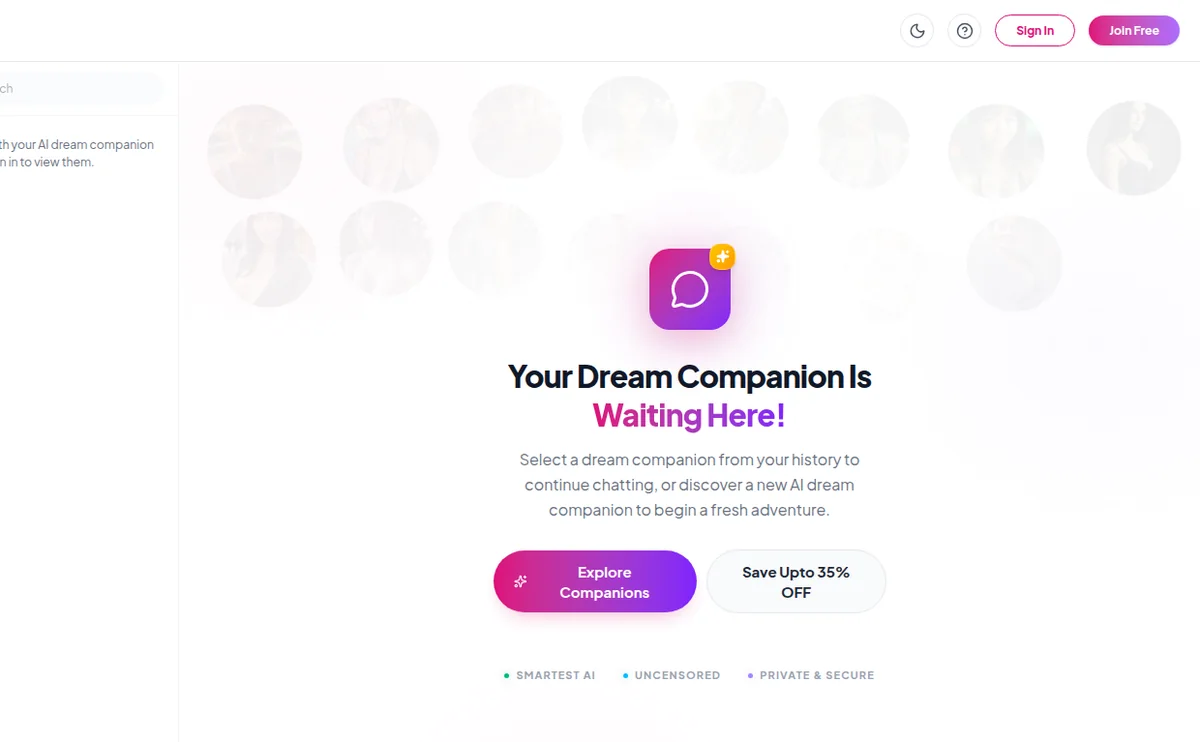
The public route gives readers a way to understand the service before handing over payment details. The homepage presents posts, likes, comments, saves, character profiles and creation routes. That is the correct level of evidence for an editorial review built from official information: it explains what the company presents and where the user journey leads without pretending that a marketing screen proves conversation quality, speed or consistency.
Onboarding is most useful when it answers three questions: whether browsing is open, when an account becomes necessary and where a paywall appears. For Rosely, the starting point is free core browsing and basic interaction. Some exact limits only appear after account creation, so a careful reader should treat the first session as a chance to inspect controls and terms, not as evidence that every advertised tool is included free.
Character identity and customization
Character choice is the foundation of a companion product. Official FAQ material says core browsing, basic interaction and model exploration are free. A reader should look for controls that define identity, personality, visual style and visibility, then separate those durable choices from temporary conversation prompts. The aim is not to maximize the number of toggles. It is to establish a fictional adult character whose purpose is clear enough that later chat or media features have context.
Rosely appears designed for creators who want companion chat, fictional influencer building and a social publishing surface together. That audience can get more from the setup by deciding what should remain stable before exploring extras. A name, broad personality, relationship premise and boundaries are more valuable than a long biography assembled only because every field was available. Product-specific control is useful when it supports continuity rather than turning onboarding into paperwork.
How the feature layers connect
The official material describes the scope without proving the quality of any individual result. Advanced image and video tools may require credits or subscriptions. That distinction is essential. A list can confirm that chat, images, voice or video exist; it cannot establish that they are fast, coherent or worth a particular credit cost in practice. The honest evaluation is about how logically those tools sit around the main companion workflow.
Free access as a buying test
The legal center links terms, privacy, refund, cancellation, moderation, underage and content-removal policies. This is the point where the word ‘free’ needs context. Free browsing, a limited conversation sample and monthly promotional capacity are different offers. A useful trial lets someone understand the product’s central loop; it does not have to include every premium model or media tool, but it should make the upgrade boundary legible before the user invests time in a character.
The safest approach is to use the available entry route to answer one practical question: does Rosely's organization fit the way you want to interact? Do not evaluate premium memory, voice, images or video from their labels alone. Note which controls are accessible, which actions display a cost and whether the account presents renewal and cancellation in language you can understand.
Subscriptions, credits and value
Free core browsing and interaction are publicly described. Advanced creation may use credits or subscriptions, but the current amount and action costs should be confirmed in the signed-in product rather than inferred from promotional pages. These details were current on July 12, 2026. Temporary discounts, regional taxes, account-specific offers and checkout experiments can all alter the number a buyer sees, so the final order summary remains authoritative.
Value is not simply the cheapest monthly equivalent. It depends on whether the included messages or currency cover the feature that brought the user there. A media-heavy plan can be poor value for text chat, while a small credit pack can become expensive if the desired action consumes it quickly. A complete stable public price and credit-consumption table was not visible in the open FAQ. That uncertainty belongs in the buying decision, not under the rug.
Chats, profiles and stored content
Rosely makes a substantial legal center easy to find, which is a strength for a platform with public posting and private companion elements. Marketing pages make very strong security statements; practical decisions should rely on the privacy policy and visibility settings rather than superlatives. Companion privacy has several layers: public character visibility, stored chat history, model-improvement use, payment records, uploaded media and deletion rights. One reassuring sentence cannot answer all of them.
Consent and fictional-character rules
Users can report content and adjust character privacy settings according to the public FAQ. Adult-only access is the beginning of the rule set, not its entire substance. Responsible use keeps characters fictional adults, avoids real-person imitation without permission and excludes exploitative, illegal or non-consensual material. Public characters may face stricter avatar, description and moderation rules than private characters because other users can discover them.
Policy clarity is a product feature in this category. It explains what can be created, how reports work and what may lead to removal or suspension. Readers should also distinguish an adult-friendly service from an unmoderated one: content filters, age checks and human review can coexist with fictional roleplay, and the current terms—not a slogan—define the actual boundary.
The audience it serves best
The strongest case for Rosely is specific: it suits creators who want companion chat, fictional influencer building and a social publishing surface together. That user is more likely to appreciate the product's organization and less likely to pay for features that sit outside the intended routine. A focused use case also makes comparison easier, because it replaces the vague question ‘is this good?’ with ‘does this service make my preferred companion activity understandable and affordable?’
The gaps buyers should understand
The main limitation is not necessarily a broken feature; it is the boundary of what official public evidence can support. A complete stable public price and credit-consumption table was not visible in the open FAQ. That matters for anyone comparing costs or privacy before signup. It also means this review does not claim superior memory, natural conversation, quick generation, easy cancellation or discreet payment unless a named official source makes the precise statement.
Rosely is less suitable for someone seeking a private one-to-one companion with no community feed or creator economy. That is not a universal criticism. Companion services make different trade-offs between simple entry, community discovery, custom creation, generated media and documentation. A lower-ranked product can still be the correct choice when its defining workflow matches a reader better than the broader products above it.
When another product is smarter
The best alternative is determined by the feature that cannot be compromised. GoonHub is simpler and character-catalog focused; MyLovely keeps custom chat and media in a more private studio format. These comparisons are intentionally narrow. They do not claim one platform wins every category; they show how a different public workflow, pricing model or documentation standard may better match a particular priority.
Strengths and minor limitations
What works
- Companion chat, fictional influencer creation and a social publishing surface form one distinctive creator network.
- Public pages expose posts, likes, comments, saves, character profiles and creation routes before signup.
- Core browsing, basic interaction and model exploration are publicly described as free, with a substantial legal center nearby.
What to know first
- A complete stable public price and credit-consumption table was not visible in the open FAQ.
- Advanced image and video tools may require credits or subscriptions whose current costs need signed-in confirmation.
- The community feed and creator economy are less suitable for someone seeking only a private one-to-one companion.
Comparisons that actually help
AI Porn Surf awards 7.1/10: Character chat, an AI-influencer feed and creator publishing provide a distinctive social companion proposition, with the usual public-profile privacy trade-off.
The rationale for preserving rank #27 is editorial fit: A distinctive companion-and-creator network that combines fictional character chat with an AI-influencer feed, publishing and community discovery. Policy transparency and pricing clarity affect confidence, while account-only details limit how strongly some benefits can be stated. The rank is therefore context for discovery, not a mathematical promise that every user will prefer this product to every entry below it.
Rank and editorial context
Rosely earns a considered place in the directory because its proposition is identifiable and its official sources provide enough material for a useful, qualified review. The final recommendation is for creators who want companion chat, fictional influencer building and a social publishing surface together. Begin with free core browsing and basic interaction, verify the current checkout and policy wording, and let the core companion workflow—not the largest feature claim—decide whether to continue.
AI Porn Surf awards 7.1/10: Character chat, an AI-influencer feed and creator publishing provide a distinctive social companion proposition, with the usual public-profile privacy trade-off.
Evidence behind the feature list: Rosely
Rosely describes itself as an AI social media platform for AI influencers and companions. A feature list is most useful when it defines the service's scope. This published detail confirms a real option, but it cannot prove how well an individual reply or output will suit a particular user.
Use it to decide whether opening the creator or catalog is worthwhile. Keep the first commitment small enough that the documented feature can be assessed before a larger plan becomes the default.
A closer reading of official information: Rosely
The homepage presents posts, likes, comments, saves, character profiles and creation routes. This detail clarifies the path a visitor is expected to take. It separates public discovery from account-only interaction and helps locate the point where registration, payment or a visibility choice becomes relevant.
What this published detail changes: Rosely
Official FAQ material says core browsing, basic interaction and model exploration are free. Published pricing or allowance language deserves a literal reading. A monthly equivalent is not the same as the amount charged today, and an included currency figure says little until the cost of the desired action is visible.
The practical meaning of the policy text: Rosely
Advanced image and video tools may require credits or subscriptions. Billing and access language changes the risk of trying the product. Renewal, prepaid duration, cancellation timing and remaining currency are separate questions, each capable of affecting value after the first session.
A buying decision grounded in facts: Rosely
The legal center links terms, privacy, refund, cancellation, moderation, underage and content-removal policies. A policy claim is valuable when it names an actual control, data category or moderation process. Broad words such as private and secure are less useful than knowing what is collected, why it is processed and where a user can request deletion.
Where the documentation draws the line: Rosely
Users can report content and adjust character privacy settings according to the public FAQ. Safety documentation defines the usable creative space. Adult access, fictional-character rules, real-person restrictions and reporting procedures protect different interests and should not be collapsed into one generic content warning.
A decision checklist for Rosely
Before choosing Rosely, turn the public information into a short decision list. The intended use is creators who want companion chat, fictional influencer building and a social publishing surface together; the starting route is free core browsing and basic interaction. Check whether that route exposes the character controls you care about, then identify the first paid action and its current cost. Free core browsing and interaction are publicly described. Advanced creation may use credits or subscriptions, but the current amount and action costs should be confirmed in the signed-in product rather than inferred from promotional pages. This sequence keeps the decision tied to the actual product instead of a category-wide assumption.
Next, separate account comfort from creative interest. Rosely makes a substantial legal center easy to find, which is a strength for a platform with public posting and private companion elements. Marketing pages make very strong security statements; practical decisions should rely on the privacy policy and visibility settings rather than superlatives. The remaining uncertainty is equally important: A complete stable public price and credit-consumption table was not visible in the open FAQ. If that missing detail affects budget, data handling or the feature you expect to use most, pause at checkout and resolve it from the current account terms. If the product still feels mismatched, use this comparison instead: GoonHub is simpler and character-catalog focused; MyLovely keeps custom chat and media in a more private studio format.
How this review was built
Method: I browsed Rosely’s public feed, profiles and creator information and reviewed its FAQ and legal centre on July 12, 2026. The assessment does not claim paid generation, subscription or private account testing.
Primary sources: Rosely homepage and FAQ, Rosely legal center, Rosely influencer creator overview. Accessed July 12, 2026.
Final recommendation
Rosely is the pick for creators who want a fictional companion to have a public-facing life, not merely a chat history. Browse the feed first: if posts, comments and creator identity feel energising, inspect the live credit costs and continue. If they feel like an audience you never asked for, a private companion will be a cleaner fit.